Wake Up in a Novel
Chapter 184: Freya Stops Writing
638 words·3 min read
Protected Reading Content
Freya stopped writing fiction.
Not forever.
For one month.
She wanted to see what happened.
Awake Stories continued normally. She edited other authors, reviewed contracts, and handled business decisions.
Sunroom kept her busy.
The Open Page held events.
But Freya did not create new narrative text.
The anomalies dropped almost to zero.
That result disturbed her more than if nothing had changed.
Louis noticed her frustration.
"You wanted evidence."
"I wanted boring evidence."
"This is still evidence."
"It's annoying evidence."
Without writing, Freya became restless.
Her bookstore novel sat unfinished at fifty-eight thousand words.
She missed the characters.
She missed the private rhythm of constructing scenes.
For the first time, she understood that writing was no longer simply a profession.
It was part of how she thought.
The possibility that writing itself triggered the unexplained system felt invasive.
Like discovering someone listened whenever she dreamed.
Eliza sent no messages during the month.
Vale remained under investigation for unauthorized Crosswind experiments and evidence alteration.
The world stayed quiet.
At day thirty, Freya opened her manuscript.
Louis sat nearby.
"You sure?"
"Yes."
She typed one sentence.
Nothing happened.
A paragraph.
Nothing.
A page.
Still nothing.
Freya relaxed slightly.
Then her autosave indicator blinked.
A temporary file appeared.
She did not open it.
Following protocol, she disconnected the laptop from the network and called the research team.
The file was preserved.
It contained one line.
WELCOME BACK, FREYA.
She stared at the forensic copy.
Anger replaced fear.
"That's enough."
Everyone expected her to stop writing again.
She did the opposite.
Freya opened a clean offline laptop and continued the novel.
Louis watched her.
"What are you doing?"
"Writing."
"It responded."
"I know."
"You're not worried?"
"I'm furious."
Freya refused to allow an unexplained system, Eliza, Vale, or anyone else to claim ownership over an activity she had chosen long before waking in this world.
She would use secure devices.
She would preserve evidence.
She would follow safety protocols.
But she would write.
That evening she completed three thousand words.
No second message appeared.
The next day, another two thousand.
Nothing.
By the end of the week, the anomaly rate returned to its previous pattern, mostly meaningless metadata noise.
Freya felt strangely triumphant.
Whatever the phenomenon was, it did not get to decide whether she told stories.
She added another line to the whiteboard.
SEVEN: I WRITE BECAUSE I WANT TO.
Louis read it.
Then beneath it he wrote:
EIGHT: PLEASE FINISH THE BOOK. I WANT MY OFFICE BACK.
Freya chased him out of the room.
Freya's month away from fiction unexpectedly improved her editing. Reading other writers without constantly comparing their work to her own draft made her more patient. When she returned to writing, she kept one day each week completely free from producing new words.
Freya recorded the facts separately from her assumptions and continued with the next practical step. That habit had become one of the strongest protections she possessed. A dramatic explanation could wait; evidence could not. Louis understood the difference, and together they refused to let uncertainty turn ordinary decisions into reactions to a story neither of them had chosen.
Freya recorded the facts separately from her assumptions and continued with the next practical step. That habit had become one of the strongest protections she possessed. A dramatic explanation could wait; evidence could not. Louis understood the difference, and together they refused to let uncertainty turn ordinary decisions into reactions to a story neither of them had chosen.
Freya recorded the facts separately from her assumptions and continued with the next practical step. That habit had become one of the strongest protections she possessed. A dramatic explanation could wait; evidence could not. Louis understood the difference, and together they refused to let uncertainty turn ordinary decisions into reactions to a story neither of them had chosen.
You May Also Like
More stories readers often continue with after this chapter.

My Husband Punished Me for a Child That Was Never His Rival's
Billionaire · Contemporary · Drama

Emma: The Matchmaker’s Heart
Classics · Comedy · Drama

The City Between Us
Contemporary · Drama · Romance
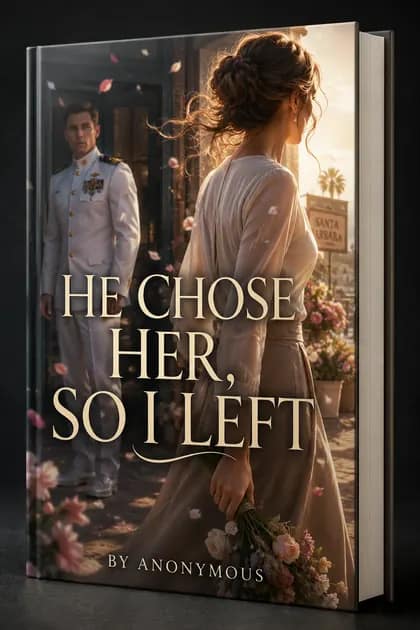
He Chose Her, So I Left
Betrayal · Contemporary · Drama

My Wedding, His Regret
Betrayal · Contemporary · Drama

Traded for Being Fat, Claimed by the Supreme Alpha
Billionaire · Fantasy · Romance

The Disabled Heiress: The Godfather's Beloved
Billionaire · Contemporary · Drama

Her Second Chance Alpha Mate
Drama · Fantasy · Paranormal